Free AASB S2 course: prepare for Australian mandatory climate reporting
NetNada's Preparing for Australian Mandatory Climate Reporting is a free, self-paced online course on the Australian Sustainability Reporting Standards (ASRS). It explains why Australia introduced mandatory climate reporting, what AASB S2 requires, who needs to report and when, Scope 3 and assurance obligations, and how to run a readiness assessment. You receive a certificate when you complete it.
- Price
- Free, certificate included
- Format
- Online, self-paced
- Quizzes
- One per chapter
- Level
- Beginner to intermediate
- Standards
- ASRS: AASB S2 and AASB S1
- Credential
- Certificate of completion
How this course compares
The questions people ask when choosing a course like this, answered honestly, including where this course stops.
- Which standards does it teach?
- Yes
- The Australian Sustainability Reporting Standards: AASB S2 Climate-related Disclosures and AASB S1, plus where they sit in Chapter 2M of the Corporations Act.
- Does it cover Scope 3 reporting?
- Partly
- Yes, as a reporting obligation: a lesson covers what AASB S2 requires on Scope 3. How to calculate each scope is taught in our free Introduction to Carbon Accounting course.
- Is it practical, or theory only?
- Partly
- The final chapter is practical: what, when and where to report, how to prepare, and how to run a readiness assessment. It does not walk you through drafting a full report.
- Does it cover assurance and directors' obligations?
- Yes
- Yes. Mandatory assurance, the director's declaration and the penalties for non-compliance each have their own lesson.
- Do you get a certificate, and is it accredited?
- Partly
- You receive a digital certificate of completion from NetNada that you can share on LinkedIn. It is not a university award or an accredited professional qualification.
- What does it really cost?
- Yes
- Nothing. Enrolment and the certificate are free, and no credit card is needed.
What you'll learn
- Explain how climate-related financial disclosure evolved and why Australia made it mandatory
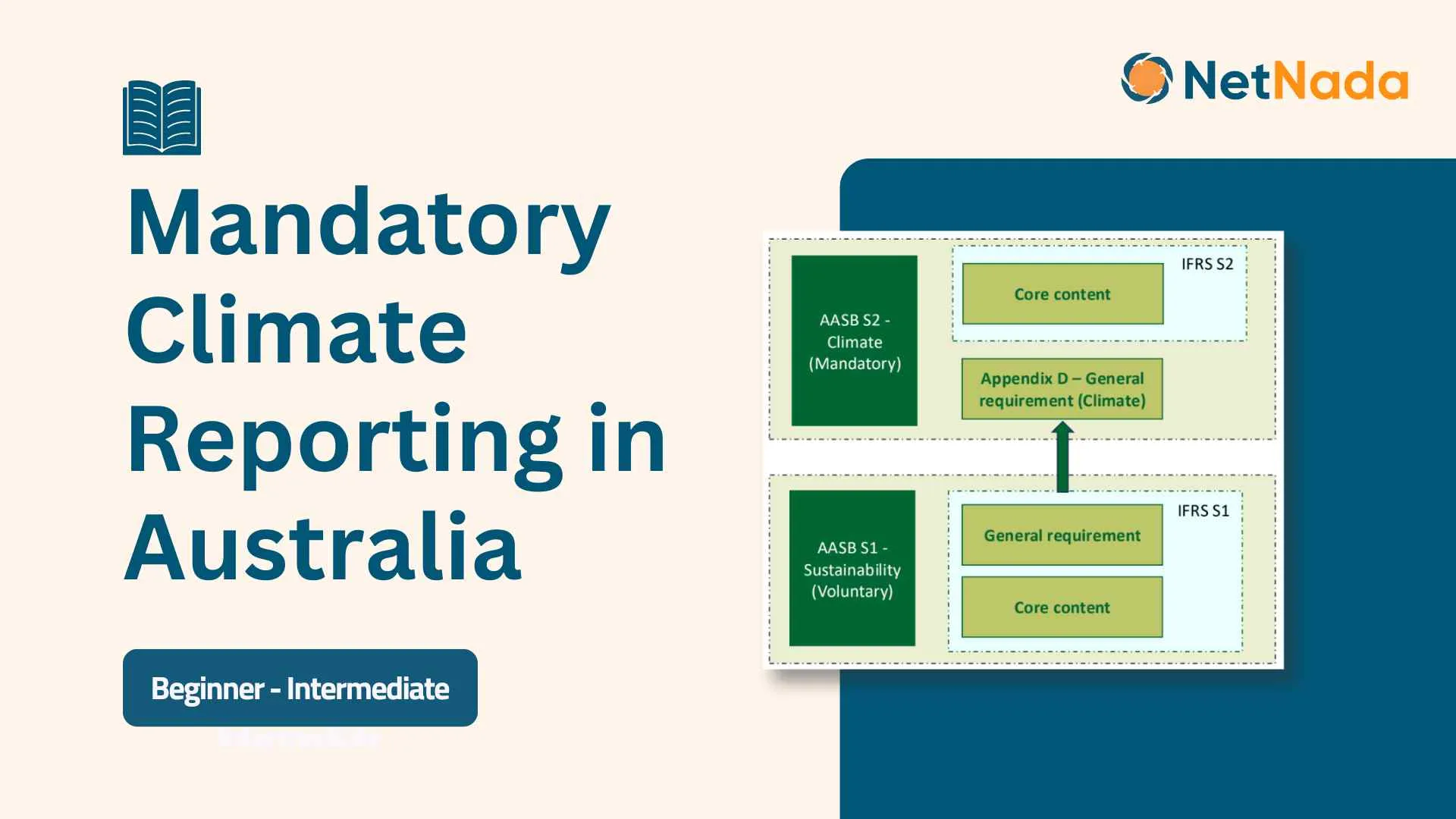
- Describe the Australian Sustainability Reporting Standards and the difference between AASB S2 and AASB S1
- Work out whether your organisation needs to report, and from when
- Understand the four areas of disclosure: governance, strategy, risk management, and metrics and targets
- Know what AASB S2 asks for on Scope 3 emissions and dual-scenario climate risk
- Understand mandatory assurance, the director's declaration and the penalties for non-compliance
- Plan what, when and where to report, and run a readiness assessment
Curriculum
Welcome
- Welcome to the course
- Chapters overview
- Introduction
Chapter 1: Understanding the origins of sustainability reporting standards How the world got from the Paris Agreement to mandatory climate disclosure.
- The global response to climate change
- The evolution of climate-related financial disclosures
- Why Australia introduced mandatory climate reporting
- The timeline of climate-related reporting
- Chapter 1 quiz
Chapter 2: What is the Australian climate reporting law? (ASRS and AASB S2) The standards, how they changed from the exposure draft, and where they sit in the Corporations Act.
- What are the Australian Sustainability Reporting Standards (ASRS)?
- Key differences between ASRS and the initial exposure draft
- Key benefits of reporting with ASRS
- What are AASB S2 and AASB S1?
- AASB S2 and ASRS in action
- Chapter 2M of the Corporations Act
- Chapter 2 quiz
Chapter 3: AASB S2, understanding the requirements and obligations Who reports, what they disclose, and what directors are signing.
- Who needs to report?
- Four areas of sustainability disclosure
- Reporting Scope 3 emissions
- Dual-scenario climate risk disclosures
- Mandatory assurance, director's declaration and risks of non-compliance
- Director's declaration: holding leadership accountable
- Risks and penalties for non-compliance
- Chapter 3 quiz
Chapter 4: Preparing climate-related financial disclosures, the sustainability report What, when and where to report, and how to get ready.
- The sustainability report: what to report
- Timelines and deadlines: when to report
- Lodging your sustainability report: where to report
- How to prepare
- Conducting a readiness assessment
- Chapter 4 quiz
Who this course is for
Finance and reporting teams
Your organisation is in Group 1, 2 or 3 and the sustainability report now sits alongside the financial report.
Sustainability and ESG leads
You need to turn existing climate work into disclosures that meet AASB S2.
Directors and executives
You will sign the director's declaration and want to know what you are accountable for.
Suppliers to reporting entities
Your customers need your emissions data for their Scope 3, and you want to know why.
About your certificate
Finish every lesson and quiz and you receive a digital certificate of completion from NetNada, which you can add to your LinkedIn profile or share with your employer. It shows you have worked through the ASRS and AASB S2 requirements. It is not an accredited qualification.
Who's behind the course

Co-Founder & Co-CEO, NetNada
Built by the NetNada team that measures and reports emissions for Australian businesses every day.
Page last reviewed 30 October 2026
Frequently asked questions
Keep learning
More free courses from the academy
Start Preparing for Australian Mandatory Climate Reporting today
Self-paced and free. When you're ready to measure your own footprint, NetNada does the calculation with you.