Supplier Emissions Tracker
Your Scope 3 emissions are only as accurate as your supplier data. NetNada's Supplier Emissions Tracker automates supplier engagement, collects primary emissions data directly from vendors, and provides actionable insights for supply chain decarbonisation—helping you move beyond spend-based estimates to actual supplier-specific emission factors.
How It Works
Scope 3 Category 1 (Purchased Goods & Services) typically represents 40-80% of total corporate emissions. Moving from spend-based estimates to supplier-specific data dramatically improves accuracy and identifies real reduction opportunities.
Import Your Supplier List
Upload your supplier master data from procurement systems, ERP exports, or accounting software. NetNada categorises suppliers by spend, industry, and emissions intensity. Identify which suppliers to prioritise for engagement based on estimated emissions contribution.
Send Automated Engagement Requests
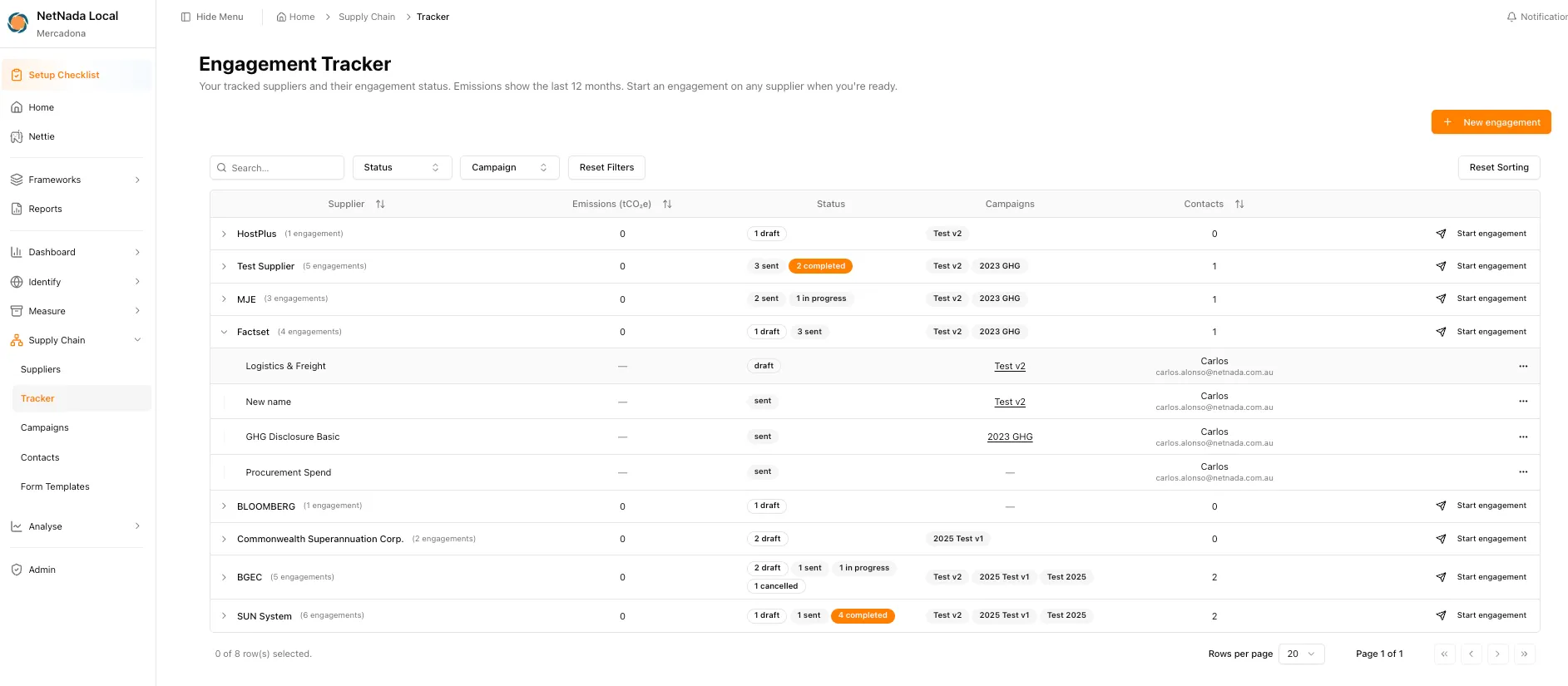
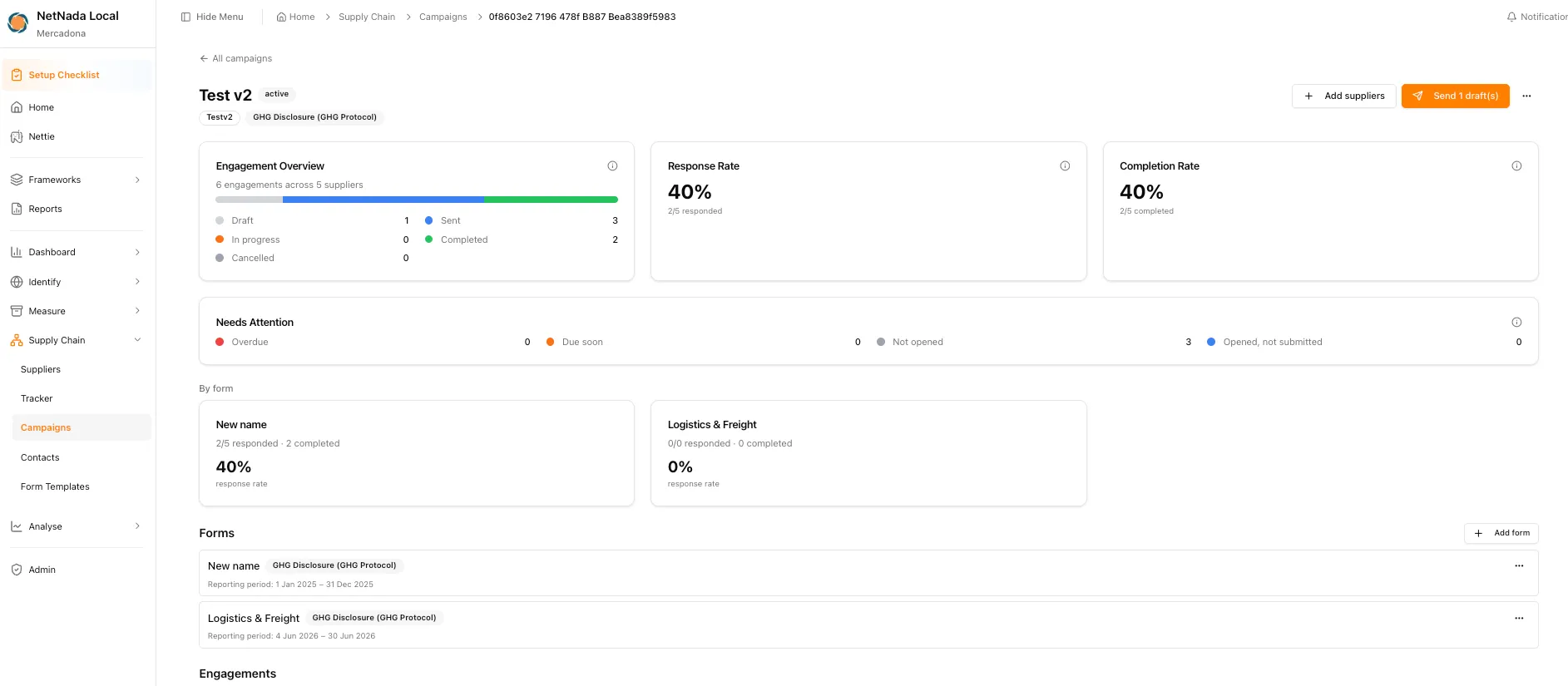
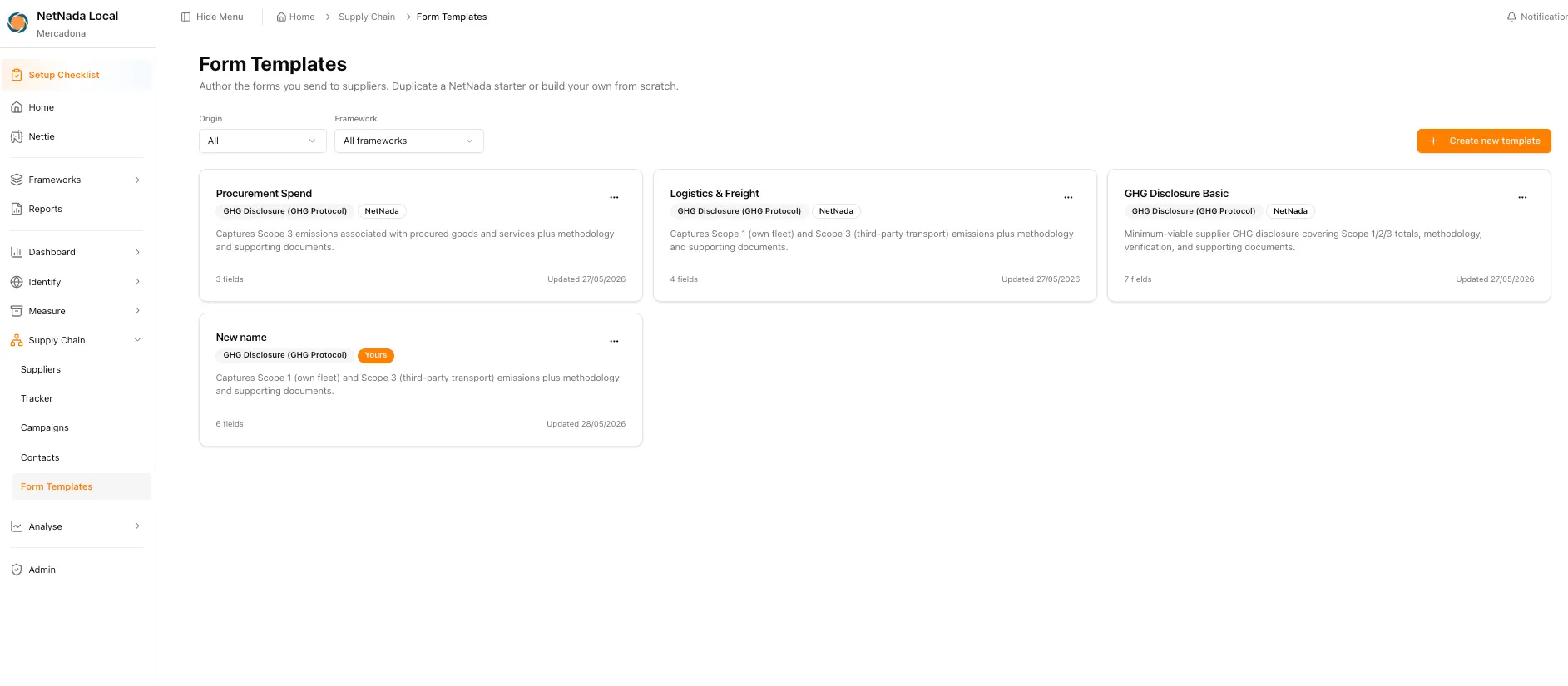
Launch supplier engagement campaigns with templated emails and a self-service supplier portal. Suppliers receive simple questionnaires requesting emissions data, product carbon footprints, or sustainability certifications. Track response rates and send automated reminders for non-responders.
Collect Primary Supplier Data
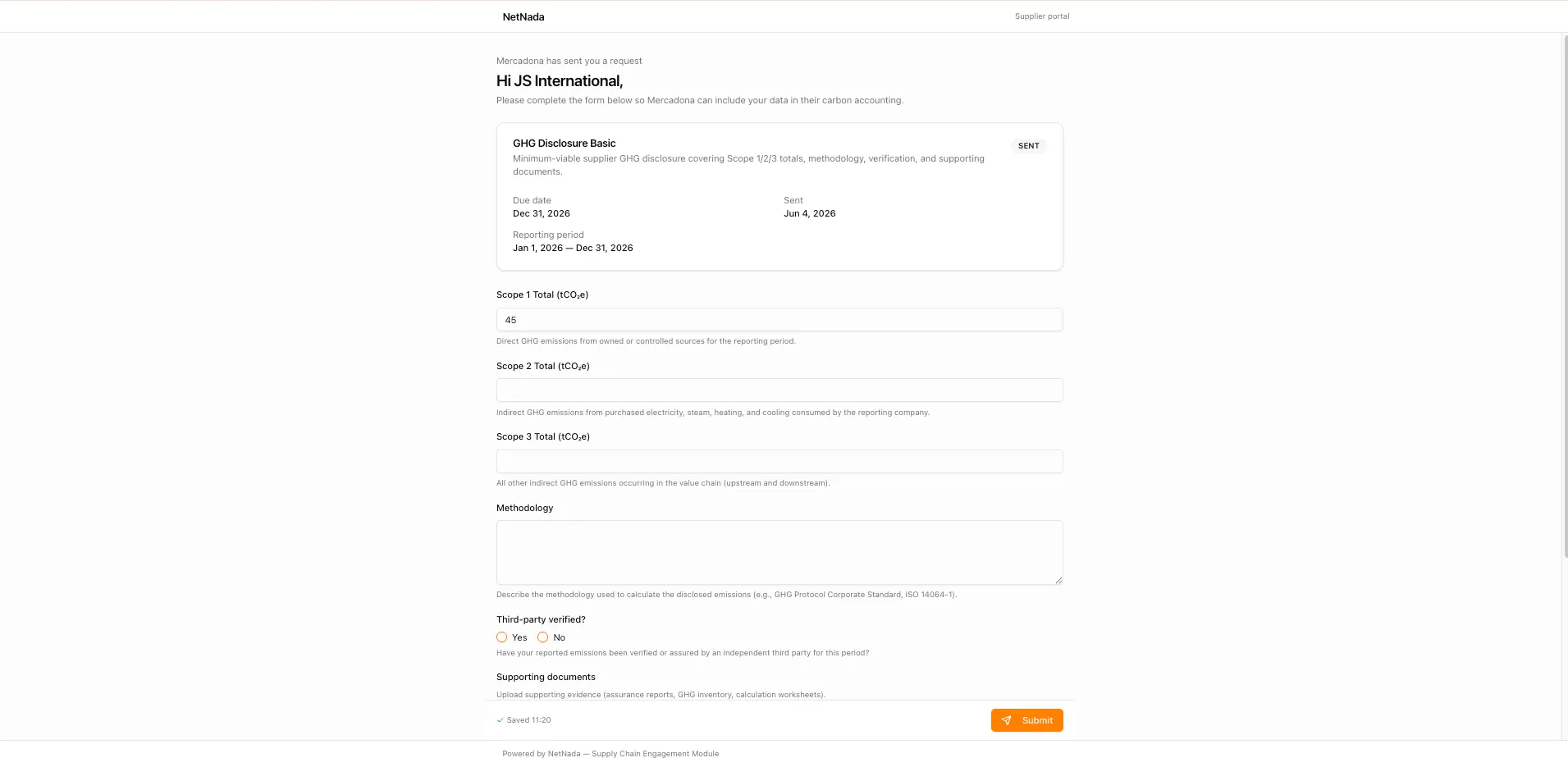
Suppliers enter emissions data through the secure portal: total company emissions, product-specific carbon footprints, or activity data for your purchases. NetNada validates submissions, flags anomalies, and requests clarification automatically. Accept CDP scores, sustainability reports, or LCA data.
Calculate Supplier-Specific Emission Factors
Transform supplier data into emission factors for your Scope 3 calculations. Replace generic industry averages with supplier-specific factors. Track data quality improvements over time—from spend-based (Tier 5) to supplier-specific (Tier 2) or product-level (Tier 1) data.
Plan Supply Chain Decarbonisation
Identify hotspots and reduction opportunities. Compare suppliers on emissions intensity, set supplier reduction targets, and track progress over time. Model the impact of switching suppliers or requiring sustainability commitments in procurement contracts.
Why Track Supplier Emissions
Improve Scope 3 Accuracy
Spend-based calculations using industry averages can be off by 50% or more. Supplier-specific data provides accurate emissions for your actual supply chain. Critical for organisations setting science-based targets requiring Scope 3 accuracy improvements.
Identify Reduction Opportunities
You can't reduce what you can't measure accurately. Supplier-level visibility reveals which vendors contribute most to your footprint and where switching suppliers or changing specifications delivers the greatest emissions reductions.
Meet Stakeholder Expectations
Investors, customers, and regulators increasingly expect supply chain transparency. CDP, ISSB, and the EU's CSRD all require Scope 3 disclosure with improving data quality over time. Demonstrate leadership by engaging suppliers proactively.
Reduce Supplier Engagement Burden
Manual supplier engagement via email and spreadsheets doesn't scale. NetNada automates outreach, data collection, validation, and follow-up—allowing your team to focus on analysis and action rather than data chasing.
Build Supply Chain Resilience
Climate regulations are tightening globally. Suppliers without decarbonisation plans pose business continuity risks. Use emissions tracking to identify suppliers needing support, recognise leaders, and build a climate-resilient supply chain.
Support Procurement Decisions
Integrate emissions data into procurement decisions alongside cost, quality, and delivery. Run RFPs with emissions criteria, compare bidders on carbon intensity, and track whether sustainability commitments translate to actual reductions.
Who Uses Supplier Emissions Tracker
Sustainability Teams
Responsible for Scope 3 reporting and corporate decarbonisation. Use supplier tracking to improve emissions data quality, identify hotspots, and demonstrate progress on supply chain engagement to leadership and stakeholders.
Procurement Professionals
Integrate sustainability into vendor selection and management. Use emissions data to evaluate supplier sustainability performance, include carbon criteria in RFPs, and track supplier improvement over contract periods.
Supply Chain Managers
Optimise supply chains for cost, quality, and increasingly sustainability. Use supplier emissions visibility to identify risks, model alternative sourcing scenarios, and build relationships with low-carbon suppliers.
SBTi-Committed Companies
Organisations with science-based targets often must include Scope 3 in their targets and demonstrate improving data quality. Supplier engagement is essential for moving from spend-based estimates to primary data required for target validation.
Large Enterprises with Complex Supply Chains
Companies with thousands of suppliers need scalable engagement approaches. NetNada's automated workflows, supplier portal, and bulk processing capabilities handle enterprise-scale supplier programmes efficiently.
Supplier Tracking Features
Supplier Portal for Self-Service Data Entry
Dedicated portal where suppliers enter emissions data, upload supporting documents, and track their own performance. No NetNada license required for suppliers. Mobile-friendly interface with multi-language support for global supply chains.
Automated Engagement Campaigns
Launch supplier outreach with templated emails, scheduled reminders, and escalation workflows. Track response rates by supplier segment, identify non-responders, and generate reports on engagement programme effectiveness.
Data Quality Scoring
Assess supplier data quality using GHG Protocol hierarchy: Tier 1 (product-level), Tier 2 (supplier-specific), Tier 3 (average data), Tier 4 (spend-based), Tier 5 (proxy data). Track quality improvements over time and set targets for data quality upgrades.
Supplier Benchmarking
Compare suppliers within categories on emissions intensity (kg CO₂e per $ spend or per unit). Identify leaders and laggards, recognise top performers, and target engagement efforts on high-impact suppliers needing improvement.
CDP Integration
Import supplier CDP scores and climate data automatically. Cross-reference CDP responses with direct engagement data. Leverage CDP supply chain module questionnaire responses where available.
Supplier Decarbonisation Targets
Set and track supplier reduction targets aligned with your own science-based targets. Monitor whether suppliers are on trajectory, identify those needing support, and model aggregate supply chain emissions reductions.
Procurement Integration
Connect with procurement systems to automatically import supplier spend data and track emissions intensity trends over time. Trigger engagement workflows when new suppliers onboard or spend patterns change significantly.
Supplier Scorecards
Generate supplier sustainability scorecards combining emissions data, data quality, responsiveness, and decarbonisation progress. Use scorecards in vendor reviews, contract renewals, and strategic supplier discussions.
See It in Action
Track suppliers, run engagement campaigns, and collect primary emissions data — all in one place.
Real Results from Real Users
See how companies are transforming their sustainability reporting
"We have 2,000+ suppliers across 15 countries. Manual engagement wasn't working—response rates were under 20% and data quality was inconsistent. NetNada's supplier portal changed everything. Response rates hit 65% in year one, and we've moved 40% of spend from industry-average to supplier-specific emission factors."
- Increased supplier response rate from 20% to 65%
- Moved 40% of spend to supplier-specific emission factors
- Identified top 50 suppliers for targeted decarbonisation engagement
"Our Scope 3 was calculated with industry averages—we knew it was wrong but couldn't get better data at scale. NetNada let us engage our top 200 suppliers systematically. Turns out our actual supply chain emissions were 30% lower than estimated because we'd already been selecting low-carbon suppliers. Now we can prove it."
- Discovered actual Scope 3 was 30% lower than estimated
- Obtained primary data from top 200 suppliers (85% of spend)
- Validated sustainability claims with auditable supplier data
"We needed to include carbon criteria in procurement decisions but had no reliable supplier emissions data. NetNada gave us supplier-level visibility. We now include emissions intensity in RFP scoring, and suppliers know we're tracking their performance. Three major vendors have set net-zero targets since we started."
- Integrated emissions criteria into RFP scoring process
- Three major suppliers committed to net-zero targets
- Reduced Scope 3 emissions 12% through supplier switching
Frequently Asked Questions
Everything you need to know about Supplier Emissions Tracker
Related Features
Scope 3 Emissions Calculator
Calculate all 15 Scope 3 categories with supplier-specific factors feeding directly from tracked supplier data.
Learn moreAI Report Generator
Generate CDP Supply Chain and other stakeholder reports incorporating your supplier engagement programme results.
Learn moreScience-Based Target Tracker
Track progress toward Scope 3 targets that depend on supplier decarbonisation and data quality improvements.
Learn moreXero Integration
Automatically import supplier spend data from Xero to keep your supplier emissions calculations current.
Learn moreStart Tracking Supplier Emissions
Move Beyond Estimates to Primary Data
Your Scope 3 is only as good as your supplier data. NetNada makes supplier engagement scalable with automated outreach, a self-service portal, and supplier-specific emission factors. Join organisations building transparent, low-carbon supply chains.